ATV Safety

Wednesday, May 25, 2011

In the first quarter of 2011, our Unit conducted two body recoveries, both of which were ATV-related.  The simple fact is that the number of ATV-related accidents that we respond to is astounding.

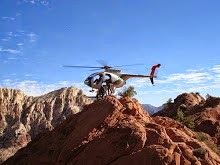
Last Sunday, one Officer and three Mountain Rescue volunteers responded via Huey to a dry lake bed located near Lake Mead.  A 25-year-old female had been riding at speeds of 35-40 MPH when she attempted to make a quick turn, ultimately flying over the handle bars.  She wasn't wearing a helmet and suffered severe head and neck injuries.  As our Unit arrived, we discovered police, ambulance, and flight for life already on scene.


ATV riding is extremely popular in Southern Nevada with an abundance of recreational areas open and available for riders to enjoy.  Unfortunately, there are many riders out there who do not follow general ATV Safety guidelines.  Our Unit highly recommends that riders educate themselves on how to be safe while riding, take rider safety classes, and avoid riding in environments that are above the skill level of the rider.  The ATV Safety Institute lists the following items as the Golden Rules of ATV Riding:
  1. Always wear a DOT-compliant helmet, goggles, long sleeves, long pants, over-the-ankle boots, and gloves.
  2. Never ride on paved roads except to cross when done safely and permitted by law - another vehicle could hit you. ATVs are designed to be operated off-highway.
  3. Never ride under the influence of alcohol or other drugs.
  4. Never carry a passenger on a single-rider ATV, and no more than one passenger on an ATV specifically designed for two people.
  5. Ride an ATV that's right for your age.
  6. Supervise riders younger than 16; ATVs are not toys.
  7. Ride only on designated trails and at a safe speed.
  8. Take a hands-on ATV Course.
As mentioned before, our Unit responds to far more ATV-related accidents than we care to admit.  If riders took basic precautions, most of these accidents could be avoided.  Take the time to educate yourself today and stay safe while riding!
Read more »

500 Feet

Sunday, May 22, 2011

Yesterday, the Mountain Rescue Team conducted a big wall training session in Ice Box Canyon at Red Rock Canyon. The objective of the mission was to work in a high angle environment that required the team to make contact with a victim that was more than 500 feet below them.

Rescues that involve heights of 200 feet or more require more specialized skill and equipment management.  In order to be prepared for any situation, the team trains above and beyond.

Here's a picture of equipment being short hauled to the upper Landing Zone:


The view of Red Rock from high above Ice Box Canyon:


A total of 6 Rescuers were lowered two at a time to help package and extricate the victim:


If you happened to be in Red Rock yesterday, you may have seen our helicopters in the Red Rock Overlook parking lot, just past Willow Springs.  Not only were we conducting a training session, but a film crew was out taking video of our Unit in action.  According to the film crew, a final version will be ready by the end of the year.  We'll continue to keep you posted on progress!
Read more »

Hypothermia vs. Hyperthermia

Monday, May 16, 2011

Hypothermia vs. Hyperthermia - What to look for

Hyperthermia
Hyperthermia, or Heat Exhaustion/Stroke, occurs when the body's core temperature rises above 100F. In the outdoor environment, most of our patients experience elevated core temperatures when they are exposed to extreme heat. This often occurs in the summer months as temperatures in Southern Nevada rise well above 110F. In many cases, hikers are active in arid environments where they are exposed to direct sunlight and little shade. Minimal water intake and excessive perspiration are also contributing factors.

Signs and Symptoms of Hyperthermia
Red, hot, dry skin are all indicative signs of hyperthermia. If it's hot out and your body has stopped sweating, this is a major sign of dehydration, which may lead to heat stroke. This dehydration can produce nausea, vomiting, headaches, low blood pressure, dizziness, and even fainting. In extreme cases, the person may become confused and even hostile. Respiration and heart rate will increase as the body attempts to distribute as much oxygen as possible.

Hypothermia
If the body's core temperature drops below 95F, hypothermia sets in. In most cases, our patients become hypothermic when they do not carry appropriate clothing with them and are exposed to cold temperatures for a long duration of time. As the body's temperature decreases, the person is unable to replenish heat that is being lost.

Signs and Symptoms of Hypothermia
Shivering and an increased heart rate are initial signs, which are both the body's attempt to rise the core body temperature. As the core temperature continues to drop, shivering will become more violent and movement will become slow and labored. In extreme cases, patients will have problems speaking and will have great difficulty in moving about, will be disoriented, and even combative. If skin is exposed, it will become blue and puffy.


What's more Common?
In Southern Nevada, we treat patients with both hyperthermia and hypothermia.  However, hypothermia is more prevalent.  Although temperatures in this region tend to fall in the warm to hot range, the desert becomes very cold at night, especially when wind and minimal shelter are present.  In higher elevations, temperatures often dip below freezing.  Snow, rain, and wind are also contributing factors.  In any case, it's important to carry appropriate clothing and fluids while exposing yourself to the elements.  It's equally as important to know and recognize the signs and symptoms.


Snow in May?
One year ago, LVMPDSAR rescued two hikers who had lost their trail at Mt. Charleston as unexpected weather conditions caused freezing temperatures and snow!  Read all about it here and stay prepared!

Read more »

Recruitment is OPEN!

Monday, April 25, 2011

If you're interested in becoming a volunteer for our Unit, now is the time to let us know. We will be holding a Basic's class this Fall for those interested in joining our Mountain Rescue team and are looking for dedicated individuals to apply.

Head on over to our Volunteer page for more information on what we're looking for in new recruits. The deadline to submit an interest form is July 17th.

Read more »

High Lines

Monday, April 18, 2011

When it comes to Search and Rescue operations, the biggest challenge is the environment that the team works in.  There's no control over the location of the patient, or the weather, or the terrain.  As a result, the Mountain Rescue team trains in every type of situation and/or terrain as possible.  This training helps prepare the team for any type of situation that arises.

Last weekend, the Mountain Rescue Team practiced high line operations.

High Lines are very useful when the surrounding terrain contains a canyon of some sort.  A canyon can be challenging for many reasons.  The team may be unable to easily cross from one side to another, transporting gear can be tedious and draining, or the patient may be located at the bottom of the canyon where accessing the patient is a challenge. 

Here's a short video of rescue personnel shooting a line from one side of the canyon to the other.  This line is used to pull the high line rope across the canyon:


The end result once the high line is set up:


Rescuer being lowered into the canyon to retrieve a patient:


Go here to see more pictures of High Line training.
Read more »

A Typical Rescue Scenario

Friday, April 15, 2011
Earlier this week, Mountain Rescue Officers and Volunteers rescued two stranded hikers from a cliff-face in Red Rock.  It was a gorgeous day, they weren't hiking a challenging trail, and they only planned on hiking for a couple of hours.  As they left their car, both hikers were wearing shorts and a t-shirt, tennis shoes, they grabbed a harness, and had about 4 liters of water between the two of them.  As the pair hiked into one of the canyons and scurried up a cliff face, they found themselves in a precarious position.  They could no longer climb up, they were nervous about climbing back down, and they were running out of day light very quickly.

This is the type of situation that our Unit sees far too often.  Hikers leave their cars with only the best-case scenario in mind.  It's a beautiful day, so what on earth could go wrong?

In the case of these two hikers, they did a couple of things right:
  1. Before leaving for their hike, they told friends and family where they were going.  They had a plan, they stuck to it, and someone else knew about it.  This is good.
  2. When the pair found themselves in a precarious position, they didn't attempt to do something that would harm them.  They knew that down-climbing could potentially hurt them, so instead of trying anyway, they found a giant ledge and stayed put.
  3. Both hikers carried a cell phone.  In this case, they were able to get cell phone reception and call for help directly from their location.
  4. They took water with them.
Since hindsight is 20/20, let's look at some of the things that this pair did wrong:
  1. The only clothing protecting them from the elements were shorts and a t-shirt.
  2. They didn't take food with them.
  3. The amount of water that they carried wasn't substantial for an extended stay.  In warm weather, hikers should consume 4 liters (or one gallon) of water in a day to avoid dehydration.
  4. Both hikers had cell phones and both cell phones were turned on during the duration of the hike.
  5. The hikers picked an easy trail, but deviated from that trail without knowing where they were going.  They ended up scurrying up the side of a cliff-face without a plan to get down.
  6. Neither hiker considered a worse-case scenario.
When these two hikers decided to pick a safe place to stay put and call for help, the sun was beginning to set.  They made their first call at about 3:30pm.  Rescue personnel didn't make contact with the pair until about 9:00pm and it took nearly three hours to conduct the straight-forward rescue.  Although these hikers had cell phones and were able to get reception, it still takes time to get personnel and equipment to the location.  While the hikers waited, temperatures plummeted and wind speeds accelerated.  When rescue personnel finally reached the hikers, they were uninjured, but both complained of being very cold.
  • What would've happened if the pair needed to use their cell phones, but the batteries had died?
  • What would've happened if the pair was unable to get cell phone reception?
  • What would their night had been like if their calls for help were unsuccessful?
This story is being shared because this is a typical rescue scenario.  Hikers and climbers leave the parking lots of Red Rock and other recreational areas around the valley every day without considering a worse-case scenario.  Extra clothes, food, and water don't weigh that much.  Stuff this extra gear in a day pack and throw it on your back.  Carry a survival kit so that you're able to start a fire.  This provides warmth and a signal for rescuers.  If you're not using your cell phone, turn it off.  Even though you're not using your phone, the battery drains quickly as the phone continually searches for a signal.  Research the area that you'll be visiting.  Familiarize yourself with the trail that you'll be hiking on along with the surrounding area.  If you decide to leave the trail, have a back-up plan.  Always know where you're going and how to get out.  And most importantly, let people know where you're going, what your plan is, when you think you'll be back, and stick to that plan.  It's difficult to predict whether or not things will go wrong, but if they do, it's good to be prepared.
  • Two liters of water weighs about 4.5 lbs.
  • Light-weight jacket weighs about 1 lb.
  • Pants weigh about 1 lb.
  • Food such as a sandwich, fruit, and energy bars weigh about 1-2 lbs.
  • Survival kit weighs less than 1 lb.
  • Researching a strategy and having a Plan B weighs nothing.
For additional safety information and survival tips, go here.
Read more »

Recent Rescues

Wednesday, April 13, 2011


Sunday, April 10th

On Sunday afternoon, two officers and two pilots responded to Calico I for an injured female with a possible broken ankle.  The helicopter was able to perform a one-skid landing, which allowed one of the Officers to exit the helicopter and make his way to the patient who was with CCFD and BLM Rangers.  She was placed in a litter, carried to the Landing Zone, and flown to the Charleston Overlook where she was transferred to medical.

On Sunday night, one pilot and one officer responded to a call in Sandy Valley to search for a suicidal subject after the subject's vehicle was located in the area.  After extensive searching, the body of the subject was found and an additional officer was called out to help with the body recovery.  The two officers were flown to the area where they collected evidence and transported the body to the Coroner.

Monday, April 11th

One pilot and two officers flew to Laughlin where a 20-year old female was hoisted off of a cliff.  She had fallen down a slope and became stuck in a spot directly above a vertical cliff.  Other than multiple abrasions, she had no significant injuries.  After providing medical care, the woman was hoisted into the Huey and transported to medical.

Tuesday, April 12th

Four officers, two pilots, and nine MR volunteers responded to Red Springs to retrieve two hikers who had became stranded on a cliff face while hiking.  As they continued to boulder up the side of the canyon, they eventually ran out of daylight and a clear trail to hike out.  Neither hiker had appropriate clothing or food, but were able to get cell phone reception from their location.  Because they were located in an area where the helicopter was unable to reach them, Rescue Personnel were flown above the hikers where technical systems were set up.  Two Rescuers were lowered to the hikers where they were retrieved and eventually lowered to the bottom of the canyon.  Neither hiker was injured.
Read more »